Itching is a symptom, not a diagnosis. The cause determines the treatment.
Dr. Catherine Outerbridge has been a clinical dermatologist at the UC Davis School of Veterinary Medicine since 2002. She has seen thousands of dogs with skin problems. The most common pattern she describes isn't any particular condition. It's an owner who has spent months treating what they think they see, without ever identifying what's actually causing it.
"They buy an oatmeal shampoo for the dry skin. The dry skin doesn't improve. They try a different food. Still dry skin. They add fish oil. Marginal improvement. They come in and the dog has had hypothyroidism for a year," she said in a 2024 lecture at the Western Veterinary Conference. "The shampoo was never going to fix a thyroid problem. You have to know what you're treating."
Dry Skin: Environmental, Dietary, and Medical Causes
Dry, flaky skin, what veterinarians call seborrhea sicca, can come from several directions at once. The most common non-medical cause is low humidity, particularly in winter when indoor heating systems pull moisture from the air. Dogs with single, short coats feel this more than heavily coated breeds. Dry skin from humidity issues typically resolves or improves significantly when a humidifier is added to the dog's primary living space and when bathing frequency is reduced.
Dietary causes center on omega-3 fatty acid deficiency, as covered in our article on coat health. The skin's lipid barrier, which retains moisture and excludes environmental irritants, depends on adequate dietary fat. Dogs on low-fat prescription diets, or eating stale kibble that has lost its fat content to oxidation, often show generalized dry scaling that improves over four to six weeks when a fish oil supplement is added at appropriate doses.
When dry skin doesn't respond to environmental and dietary interventions over six weeks, it's a medical problem until proven otherwise. Hypothyroidism, Cushing's disease, and autoimmune conditions like sebaceous adenitis all produce generalized skin scaling as a presenting sign. These require bloodwork and, in some cases, skin biopsy for diagnosis.
Hot Spots: What They Are and What Drives Them
A hot spot, or acute moist dermatitis, is a localized skin infection that develops rapidly, often within hours, when bacteria colonize an area of traumatized skin. The trigger is usually something that causes the dog to scratch, lick, or chew a spot intensively: a flea bite, a bee sting, a matted coat holding moisture against the skin, or an ear infection that drives head-shaking that abrads the neck skin.
Hot spots look alarming because they appear quickly and can double in size within a day. A patch of skin that was fine in the morning may be a raw, weeping, 3-inch lesion by evening. The bacteria responsible, primarily Staphylococcus pseudintermedius, thrive in the warm, moist environment created by matted fur and skin secretions.
"Every hot spot has a cause. The hot spot is the fire. Somewhere nearby is what started it. If you only put out the fire and don't find the source, it comes back."
Dr. Catherine Outerbridge, UC Davis School of Veterinary MedicineTreatment requires clipping the fur from the affected area to expose the lesion to air, cleaning with a dilute antiseptic, and preventing the dog from accessing the area while it heals. Most hot spots need a short course of antibiotics, topical or systemic depending on size, and an e-collar to interrupt the licking cycle that perpetuates the infection. An uncomplicated hot spot typically heals in seven to ten days. The underlying trigger requires separate identification and management.
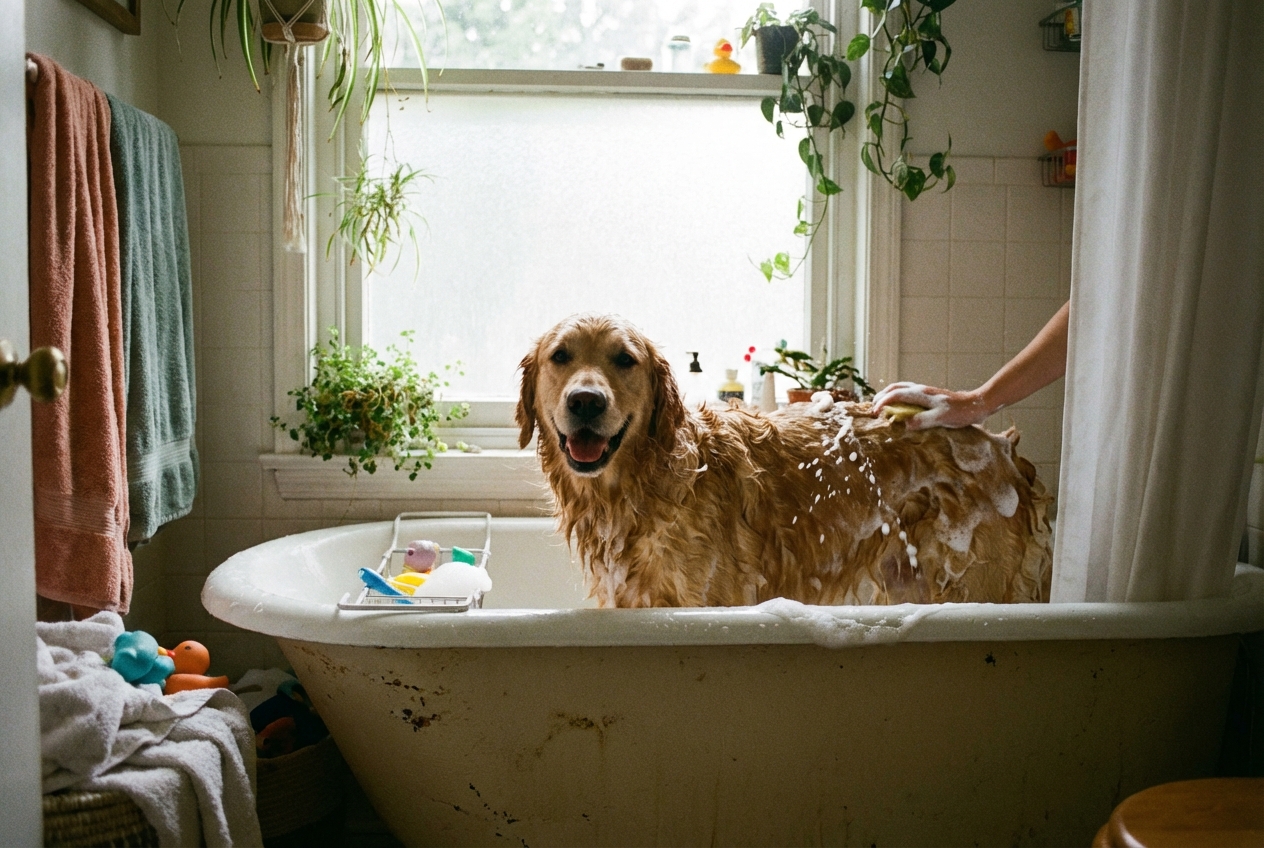
Dogs with dense, double coats are most susceptible. Golden Retrievers, Labrador Retrievers, and St. Bernards develop hot spots more frequently than other breeds. The thick undercoat traps moisture. In warm, humid weather or after swimming, that moisture can create the conditions for a hot spot to develop in hours. Thorough drying after water exposure, particularly in the neck, base of tail, and hip area, reduces risk significantly.
When Itching Is Allergies and When It's Infection
Both allergic dermatitis and skin infections cause itching. The distribution and associated findings help separate them. Allergic itching tends to be bilaterally symmetric, meaning it affects both sides of the body in the same locations. Paw licking, belly scratching, ear inflammation, and face rubbing are characteristic patterns of atopic (environmental) allergy. The skin in allergic dogs often looks relatively normal between flares, or shows only mild redness.
Secondary infection, which can be bacterial (pyoderma) or fungal (Malassezia dermatitis), produces more visible lesions: papules, pustules, crusting, and in the case of yeast, a characteristic musty or corn-chip odor. A dog with allergy-driven itching who has been scratching for weeks will commonly develop secondary infection at the sites of repeated trauma. Both problems then exist simultaneously, and treating only the allergy without addressing the infection, or vice versa, gives partial results at best.
Dr. Douglas DeBoer at the University of Wisconsin-Madison has noted that food allergies and environmental allergies look clinically identical in dogs. The only way to separate them definitively is an eight-to-twelve week hydrolyzed or novel protein elimination diet trial. Blood allergy tests and skin prick tests identify environmental allergens reliably, but neither method reliably identifies food allergens in dogs. The diet trial, despite its inconvenience, remains the diagnostic standard.
Home Remedies: What Actually Works
Colloidal oatmeal baths have legitimate evidence behind them. Oatmeal contains avenanthramides and beta-glucan, compounds with anti-inflammatory properties that reduce histamine-mediated itch at the skin surface. The relief is temporary, lasting hours, but it's real and provides comfort while other treatments take effect. Colloidal oatmeal shampoos sold for dogs have demonstrated efficacy in clinical trials for symptomatic itch relief in atopic dogs.
Coconut oil applied topically is widely recommended in pet wellness communities. The evidence is thin. The medium-chain fatty acids in coconut oil have some antimicrobial properties in vitro, but there are no published clinical trials demonstrating meaningful benefit for dog skin conditions. The primary risk is that the greasy texture traps moisture and debris against the skin if applied heavily, potentially worsening conditions it was meant to help.
Omega-3 fatty acid supplementation (fish oil) has solid evidence for reducing the severity and frequency of allergic flares over time. It's not a rescue treatment for acute flares, but as a daily supplement at doses of 20 to 55mg EPA and DHA per kilogram of body weight, it reduces inflammatory cytokine production in skin tissue. The effect takes four to six weeks to develop and requires consistent daily dosing to maintain.
Skin problems often connect to bigger health patterns.
Our free assessment checks your dog's breed, age, diet, and symptoms against known risk factors for the most common canine conditions.
Take the Free Health AssessmentHome Remedies That Don't Work and Some That Make Things Worse
Apple cider vinegar applied to broken or inflamed skin causes chemical burns. It's acidic enough to damage the tissue it's supposed to help. Despite widespread circulation of this recommendation in pet owner forums, no veterinary dermatologist endorses it for active skin lesions. On intact, healthy skin it's harmless but also ineffective for any condition.
Hydrogen peroxide is similarly problematic for wound care. It kills bacteria but also kills the fibroblasts responsible for wound healing. Veterinary wound care guidelines have moved away from hydrogen peroxide in favor of saline irrigation, which cleans without damaging healing tissue.
Benadryl (diphenhydramine) provides mild, short-term itch relief in some dogs because its antihistamine action reduces histamine-mediated itch. It doesn't address the underlying cause and sedates many dogs, which may be why owners perceive it as working when the dog simply becomes too drowsy to scratch. For significant allergic disease, it's insufficient as a primary treatment. Your vet can discuss more targeted options including Apoquel or Cytopoint, both of which have substantially stronger evidence for canine atopic dermatitis.
When to Go to the Vet
A skin problem that hasn't responded to basic interventions in two weeks is a vet visit. Hot spots, any skin lesion that appears rapidly and is weeping or spreading, warrant same-day attention because they worsen quickly. Patchy hair loss with or without scaling needs diagnosis before treatment. And any skin problem accompanied by behavioral changes, lethargy, appetite changes, or increased thirst is a systemic problem that needs bloodwork, not topical treatment.
The connection between skin health and broader body health is consistent. Dogs with chronic skin conditions often have parallel issues elsewhere: dental inflammation, gut dysbiosis, or hormonal imbalances. A complete workup rather than targeted symptom management saves time and money over the long run. If your dog's dental health hasn't been evaluated alongside the skin assessment, that's worth addressing at the same visit. The bacteria responsible for periodontal disease travel systemically and can amplify inflammatory responses throughout the body, including in the skin.